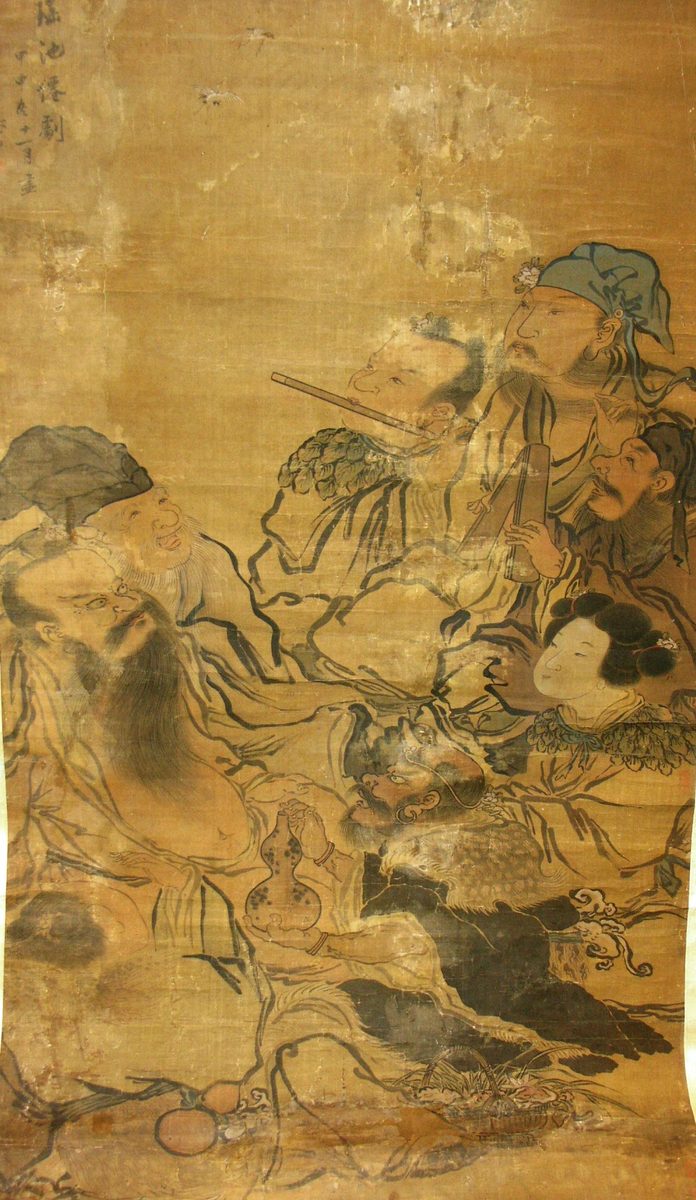
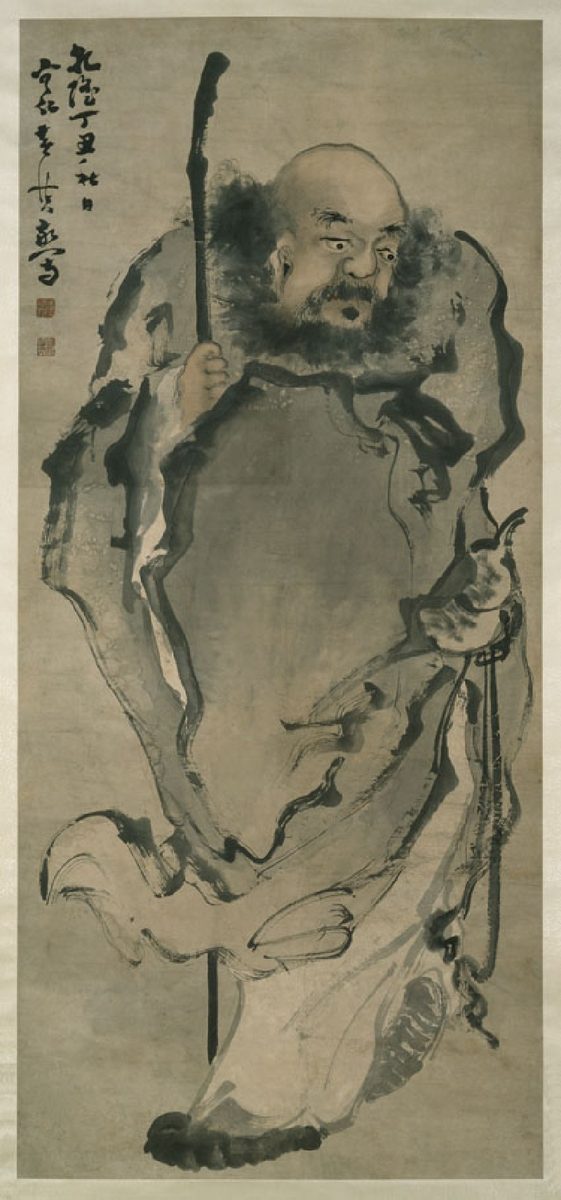
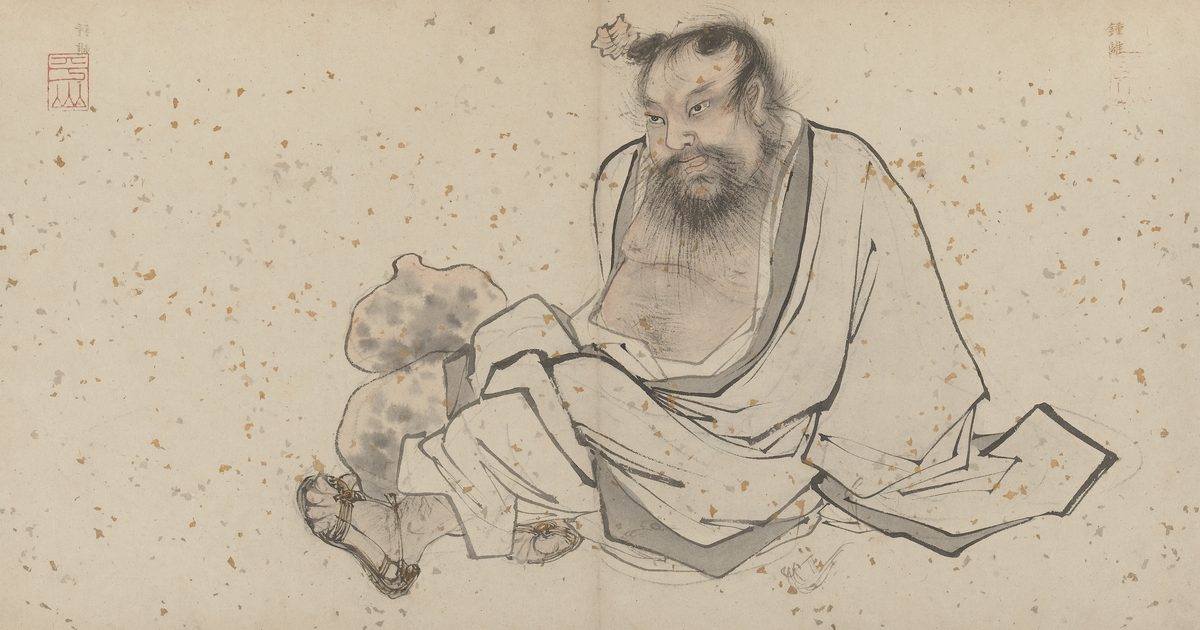
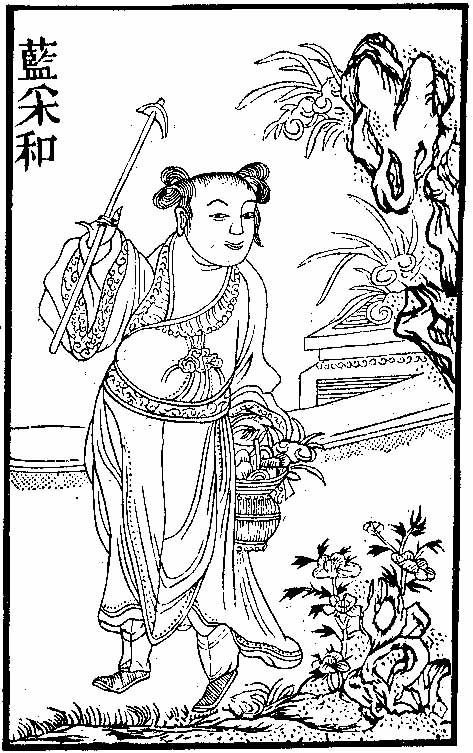
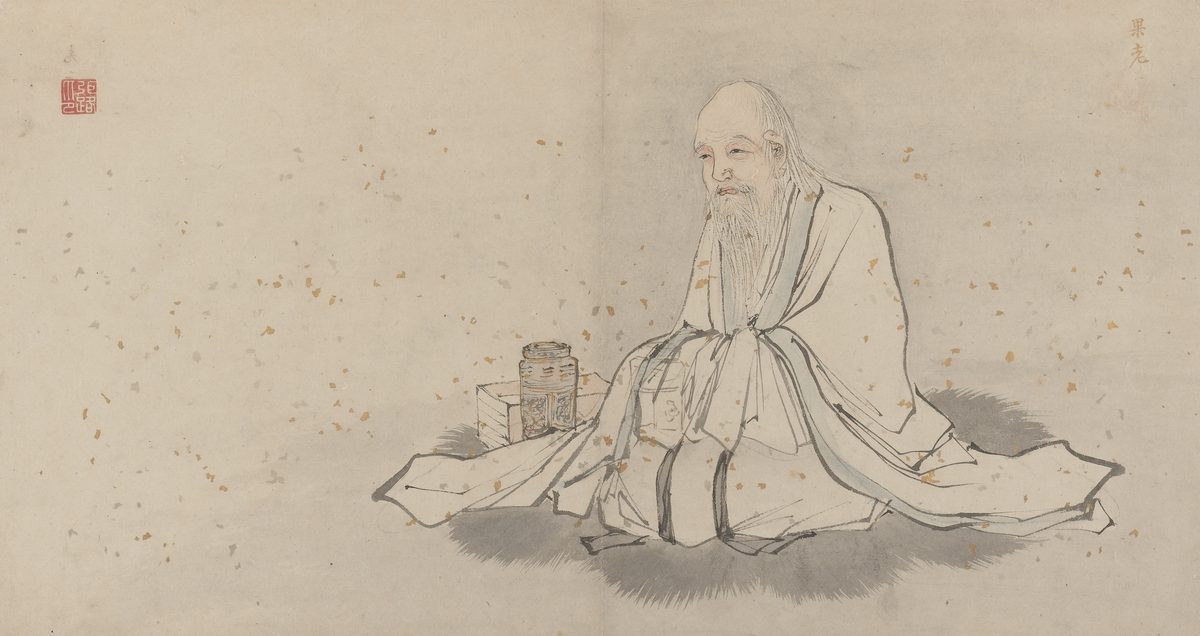
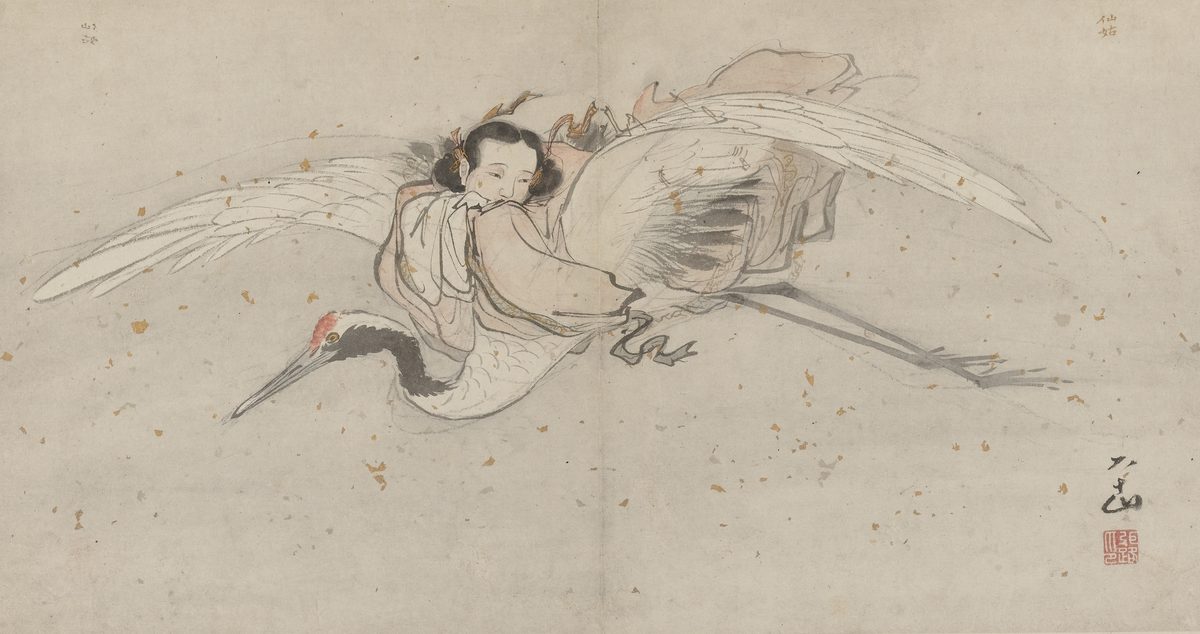
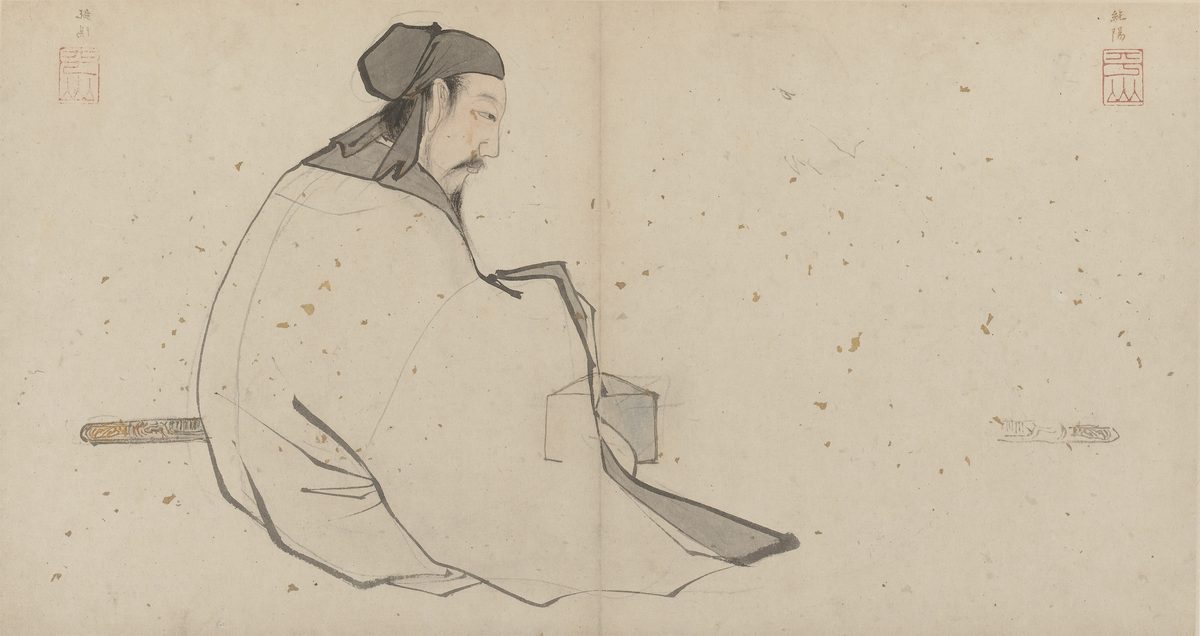
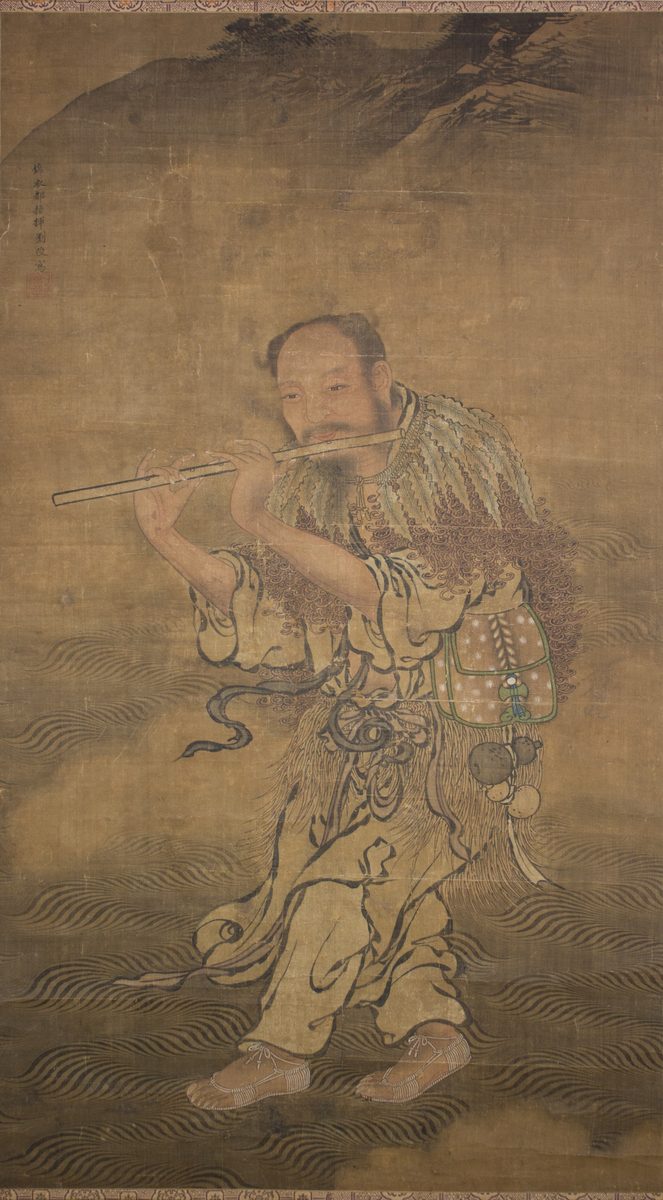
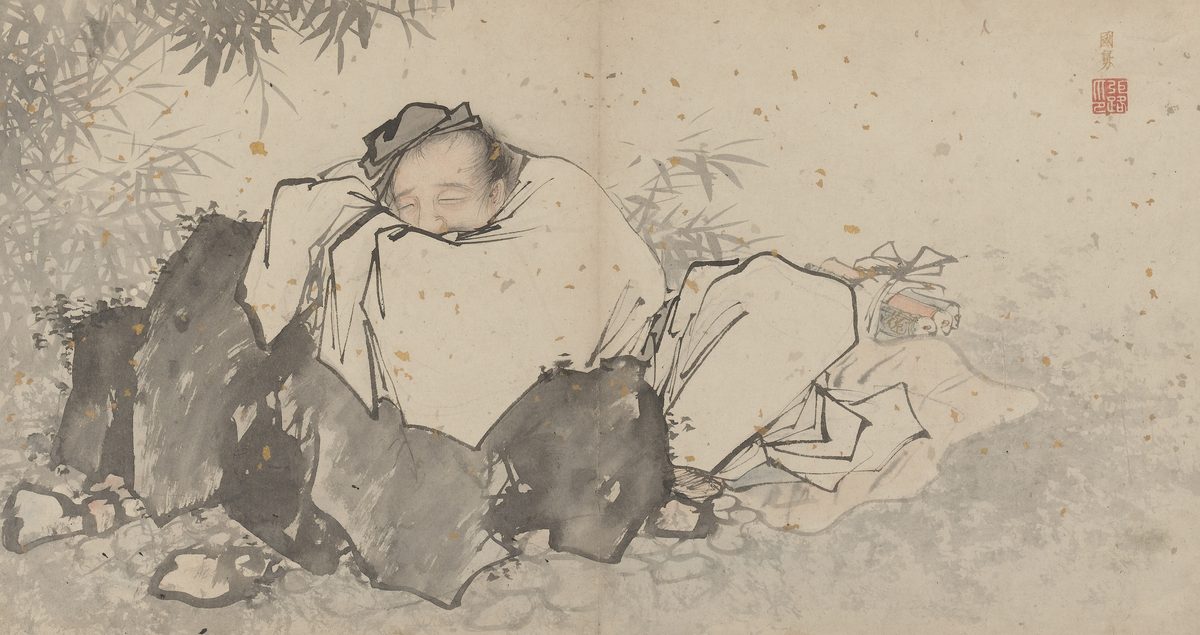
Today's fixed Eight Immortals did not emerge at one stroke from a single era or classic. Scholar Wang Yongkuan traces the term to the Eastern Han: Mou Rong's On Settling Doubts (Li Huo Lun) mentions "Wang Qiao, Chisong, and the registers of the Eight Immortals — 170 volumes of divine books," without saying who the eight were.[8]
For nearly a millennium the label was attached to entirely different groups. The Han-era "Eight Gentlemen of Huainan" were eight retainers of Liu An, Prince of Huainan — men of letters, not gods, immortalized by later tradition because their patron loved alchemy; Empress Wu Zetian's inscription for the Crown Prince of Ascension already speaks of the "Eight Immortals of Huainan."[9][3]The Five Dynasties had the painted "Eight Immortals of Shu" (Rongcheng Gong, Laozi, Dong Zhongshu, Zhang Daoling and others), while Du Fu's Tang poem "Song of the Eight Immortals of the Wine Cup" celebrates eight hard-drinking literati such as Li Bai and He Zhizhang.[3]
The lesson: Chinese culture long favored naming groups of eight, but "from Han to Tang the name existed while the roster had yet to take shape." The Huainan, Shu and wine-cup eights are not steps on a single line leading to today's Eight Immortals.[8]